

This is not another post about penises. No, this is a post about other types of one eyed monsters. Of the mythological and metaphorical variety.
Mythical monsters
My daughter’s latest obsession is Percy Jackson- a wonderful series of books laced with Greek mythology. Percy is a demi-god who earns this title by being the genetic offspring of Poseidon, God of the seas. It seems those Greek Gods are promiscuous, and can’t stop themselves from having it off with mortals, giving rise to a sanctuary dedicated to keeping their children safe - the aptly named Camp Half-blood.
In the second book of the series, Sea of Monsters, we’re introduced to a new character in Tyson, an orphaned adolescent cyclops who is taken in by Percy and his mortal mum. Apart from having one eye, Tyson is the typical big loveable buffoon type character - not the sharpest tool in the shed, very clumsy, but mostly timid and gentle. Not that his camp-mates see him that way. They are mistrusting and keep a wary distance from him.
You see, amongst the demi-god community cyclopes are known as violent giants who indiscriminately hurt and eat satyrs for breakfast. For a few, this is based on lived experience with other cyclopes, but for most it’s a learned experience passed on through stories within the community.
Tyson is stigmatised because he’s a cyclops.
The combination of looking at the word stigma in relation to cyclopes and Greek mythology makes me think about its etymology. And, wouldn’t you know it, the word stigma does indeed have it’s origins in Greek, as this excerpt from Erving Goffman’s seminal text Stigma1, explains:
The Greeks, who were apparently strong on visual aids, originated the term stigma to refer to bodily signs designed to expose something unusual and bad about the moral status of the signifier. The signs were cut or burnt into the body and advertised that the bearer was a slave, a criminal, or a traitor—a blemished person, ritually polluted, to be avoided, especially in public places.
When it comes to visual aids to signify ‘something unusual and bad’, you can’t get much more obvious than having one eye in the middle of your forehead. In the real world, however, these signs can be much more subtle, albeit just as mythological and invented by humans.
Which brings me to my next one-eyed monster- the metaphorical kind.
One-eyed football fans
I grew up steeped in the culture of Australian rules football, with our national competition known as the Australian Football League (AFL) taking shape in 1990.
My hometown of Adelaide has two teams in the AFL, starting with the Adelaide Crows, who were the first to join the league in 1991. The Crows represented all of the pre-existing clubs across the state of South Australia…well, kind of. There was one local club that never really accepted the Crows as ‘their team’- Port Adelaide.
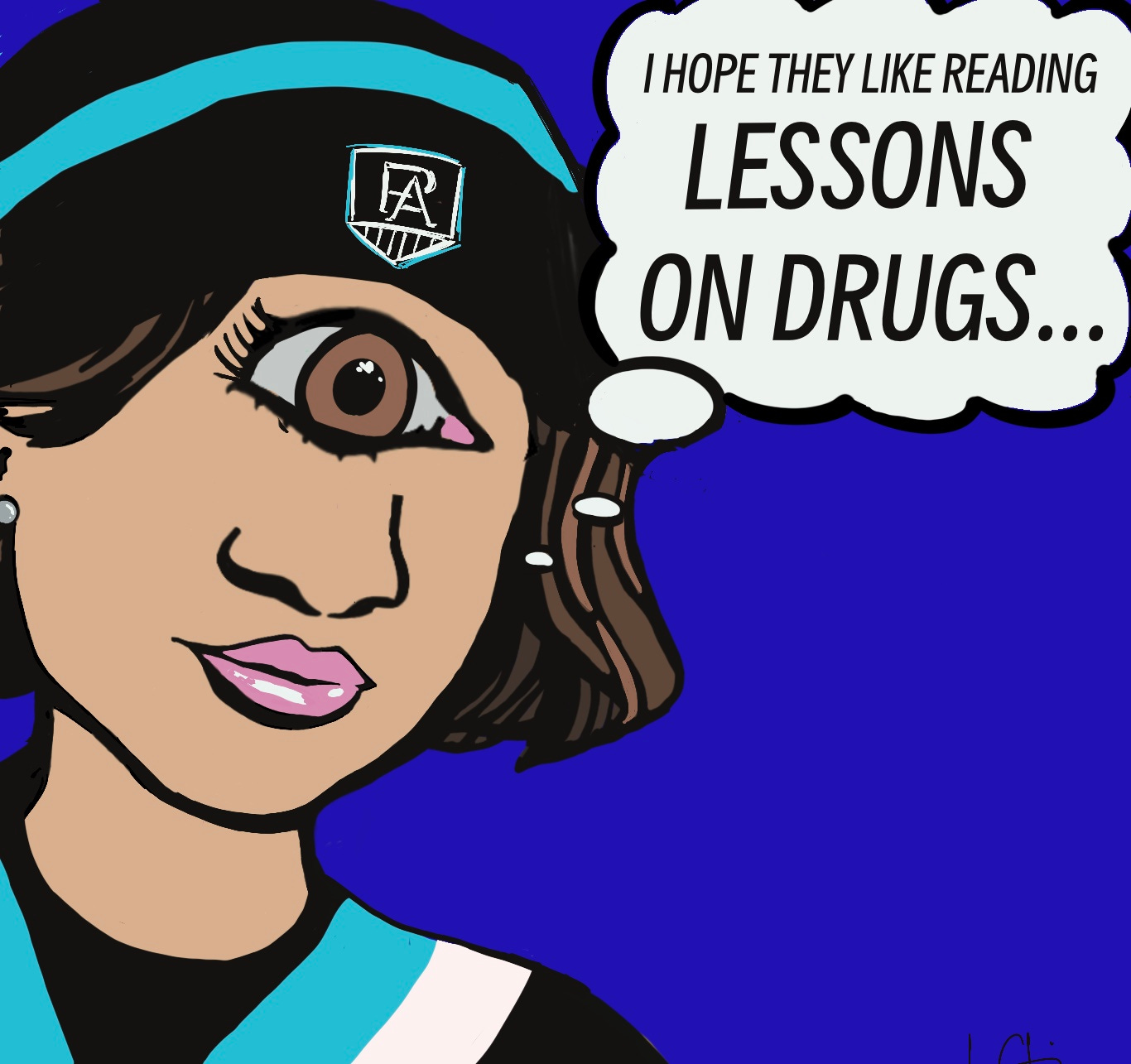
As one of the oldest professional football clubs in Australia, Port Adelaide had a legion of loyal supporters, many of whom refused to accept the loss of identity associated with a statewide club. We have a term for these types of obsessive football fans who see the world through the singular lens of their team - we call them ‘one-eyed’. And the determination of these one-eyed supporters paid off, seeing Port Adelaide Power successfully debut in the AFL in 1997.
If you’re ever visiting Adelaide and would like to conduct some sort of social experiment - ask someone if they’re a Port Adelaide supporter. This simple question will likely trigger one of three telling responses. A ‘yes’ tells you they’re a Port Adelaide fan. Duh, that’s obvious. A simple and ambivalent ‘no’ suggests the respondent is not a football fan, not from South Australia, or both. Finally, a response of disgust accompanied by a string of insults, possibly including such descriptors as ‘missing teeth’, ‘inability to read’, references to unemployment benefits and the like…well, that person is a South Australian who supports basically any other football club other than Port Adelaide.
Like the cyclopes, being a Port Adelaide fan has stigma attached to it. Stigma that’s rooted in all sorts of stereotypes and prejudice2.
Unlike the cyclops though, the stigma of being a Port Adelaide isn’t one that’s immediately visible unless someone is wearing the team colours - it has to be discovered. Only then does this seemingly normal looking person rise up and take the metaphorical shape of a giant cyclops in some people’s eyes.
Eyes open
I’m sure it’s obvious that ‘normal’ is a relative term. Tyson the cyclops is stigmatised at camp half-blood, but he’s just one of the crowd at a cyclopes convention. And while I think the one eyed football fan is a nice example of a stigmatised attribute that is less visible and able to be concealed, I very much hope our society isn’t so messed up that people are actually treated poorly based on their sporting preferences. Unfortunately though, the same can’t be said about other types of stigmas, like drug use.
The stigma surrounding drug use is centuries old. Just hearing the term ‘drug user’ is probably enough to conjure up a metaphorical cyclopes-like-one-eyed view of what that means. But what if we zoomed out, and considered recreational and illicit drug use from a population level? Would that help us regain the vision in our second metaphorical mind’s eye and provide some perspective?
Enter, wastewater epidemiology.
As explained in a previous post, the body’s main way of eliminating drug compounds from the body is through the urine, which ends up in our wastewater. Various research centres across the world analyse samples from wastewater treatment facilities, and using this data they’re able to show geographical patterns in drug use and how they change over time.
Now, I’m well aware that while the data itself may be objective, any interpretation of that data very much depends upon the person (or organisation/Government department) telling the story. So please keep it in mind that this story is being told from my perspective, and isn’t infallible- I’m not an expert in this area, I just got intellectually excited when I came upon it earlier in the week and wanted to share that3. With that disclaimer, let’s persist.
What stands out to me when I look at this Australian report, and this European site (which includes a cool data explorer tool illustrating global patterns of use) is that while patterns of drug use may vary from place to place and over time, the general demand for drugs persists4. This means there’s a certain level of risk that also persists - for the individuals and their families, and for society more broadly.
It’s my belief that we have a collective social responsibility to help manage this risk of harm, and I don’t mean ‘just say no’ or putting people in jail. What I mean is the structural implementation of public health policy measures, like providing adequate healthcare services to minimise harms (e.g. injecting rooms, drug testing, naloxone) and supports to help people reduce or stop drug use (e.g. nicotine replacement therapy, opioid substitution programs)5. Population data that comes from programs like wastewater monitoring helps policymakers understand the need for these types of services.
Wastewater monitoring also helps us understand how drug use is changing, with high sensitivity methods able to detect minute traces of substances, providing early signals of emerging substance use within the community. One of the substances that was recently detected in Australian analyses was the extremely potent and very dangerous synthetic opioid nitazenes. For context, these compounds were found to be so difficult to dose safely that the drug company abandoned their development...i.e. a massive safety risk due to potential for accidental overdose and death.
The good news is that opioid overdoses (including those due to nitazenes) can be reversed, and lives potentially saved through timely use of a drug called naloxone which can be given through a nose spray or injection. Emphasis on the timely - people need to have naloxone on hand and know how to use it when they need it. In countries like Australia this is made easier through the take home naloxone program which makes it available over the counter free of charge from participating pharmacies6. The bad news is that not everyone who uses substances like nitazenes even knows they’re using them - sometimes these types of compounds are present as contaminants.
Get this plank out of my eye
I’ll be honest - my immediate reaction when I heard about the potential of nitazenes as a contaminant in drug products is to think something like ‘that’s a problem for ‘real drug users’, I doubt this will affect me’. But, as I stopped to think about it a bit, I started to realise that the boundaries around what’s considered ‘illicit’ drug use are getting fuzzier these days.
High costs of medicines and legal drugs like nicotine, policy restrictions, product shortages, and the internet in general have made it much more common for people to source restricted medicines from the black or grey market. The black market for nicotine products in Australia is booming, as is the sourcing of prescription-only products via the internet.
As explained in The golden triad of drug products, when you buy an unregistered product there’s no assurance of quality. What this means on a practical level, is that risks of contaminants in counterfeit products are no different from the risks with illicit pills and injectables - if you don’t test, you can’t be sure7.
When these products have been tested, we find some troubling results. We find nitazenes in vapes being sold on the black market, with people unaware until they presented to the emergency department. There are also a host of examples of counterfeit prescription medicines including Gender affirming hormone treatment and anabolic steroids that don’t work or contain something else, GLP1-As containing insulin, erectile dysfunction medicine that contained diabetes drug, ADHD meds containing a fatal amount of fentanyl…
I’m not writing this to be alarmist, or judgemental. I’m writing it because I see the paradigm of drug use shifting within our community. The people who are making the choice to access medicines and drugs from the grey and black market aren’t doing it because they’re ’social deviants’ - they’re making pragmatic decisions based on the information they have available to them.
I don’t believe we can stop people from making autonomous decisions about the substances they put in their bodies, but I do think we can help people make better informed decisions and provide access to the health services they need.
Both sides, now
Having quality sources of consumer information and health services available is great, but they’re not much use if people don’t engage with them. And one of the barriers to access is, you guessed it, stigma.
Goffman describes stigma as a form of ‘spoiled identity’, and talks about non-visible stigmatising attributes as having the power to ‘discredit’ someone. It follows that these types of stigmatising attributes impact behaviour within personal relationships, from both sides.
The person with the stigma might choose to conceal it, guarding themselves from being ‘discredited’, reducing their level of openness within the relationship. Conversely, the other person in the relationship may consciously or subconsciously alter their behaviour upon discovering the ‘discrediting’ information.
Healthcare is built on relationships, and broadly speaking, all healthcare encounters share the same general structure. I have a problem I can’t fix on my own so I choose to go to someone for help (or not). Within that interaction, the practitioner gathers information to understand my needs, and applies their skill and expertise to help me manage the problem.
For the ‘patient’ their willingness to access a healthcare service, and their level of openness to share honest information about themself, which might include revealing stigmatising, or potentially ‘discrediting’ information.
For the ‘practitioner’ their ability to gather enough information to understand the problem and determine the best plan for management depends on the ‘patient’s’ willingness to share, and respond sensitively to any ‘discrediting’ information that’s discovered.
If we truly want to improve the health of our community, we need to learn how to build trusting relationships, which requires us to learn about how to deal with stigma and recognise how it impacts our behaviours.
In truth, I didn’t write this post to provide advice on how we can do that, I wrote it as a way of exploring some of my own biases and prejudice, and to reflect on how social stigmas impact my approach to healthcare as both a consumer and health practitioner. Perhaps, in a somewhat ironic turn of events, this post is suffering from a case of astigmatism…it doesn’t have a specific point. But I think that’s ok.
Thanks for reading this Systems on Drugs post. If you got this far, please think about clicking on the heart, sharing or writing a comment to share your thoughts.
I’m by no means saying this text is perfect, just that it helps us understand stigma. It was written in 1963 and some of the language and perspectives certainly reflect that.
Port Adelaide is, as the name suggests, a port, and their fans have traditionally been working class people, including ‘bogans’ and immigrant workers (I say that coming from a family of Port supporters). The same kind of stigma rooted in classism is also seen in Melbourne toward Collingwood fans, and other places I’m sure.
I was lucky enough to hear a lecture by UniSA’s own Prof Cobus Gerber at a conference earlier this week, and have a conversation with him over morning tea, which helped muse this post.
It’s almost like using substances to dissociate from the self might be part of the human condition, and that these substances result in physiological and psychological dependency, or something.
I think we also need to invest in research about how we can better support people, which includes the development of novel approaches, like evidence to determine the effectiveness and safety of psychedelic supported psychotherapy.
Many opioid overdoses also occur accidentally through use of prescribed medicines like morphine and oxycodone. It’s a good idea to have naloxone on hand if you or someone in your household uses opioids regularly.
The degree of risk associated with a contaminant will also depend on dose and route of administration. Generally speaking, if a product is taken orally it will have lower risk due to first past metabolism and slower absorption time (pharmacokinetics, baby). Actions that modify a product intended for oral use and administer via a different mode of administration (e.g. snorted or injected) increase this risk.
Well done Lauren. I don’t know how manage to pack so much in there. Really terrific synthesis weaving cyclops into stigma into our own biases. And the Percy Jackson bit— my daughter too!
We have stigmas around sports teams in Scotland too!
Q: How do you know ET is a Rangers fan?
A: He looks like one. 😂