
A little less constipation, a little more action
Why medicines help, but can't do the whole performance


Sometimes you receive a gift that tells you someone really knows you well. Like tickets for Elvis An American Trilogy. Three of the world’s best Elvis impersonators serving up the best kind of eras tour. So. Much. Fun. (not said ironically).1
Which got me thinking…how does one go about becoming the world’s best Elvis impersonator?2
The look is clearly essential. Your impersonation era is tightly bound to your hairstyle and body composition. If squeezing into a pair of black leather pants is an impossible proposition then ‘comeback era’ Elvis is simply not for you.
Which gets to the next E-factor (yes, I’m making that a noun) - costuming. Yes, without the winged white jumpsuit, the mutton chops and coiffed hair look less like ‘Las Vegas Elvis’ and more like…well, I don’t want to judge people’s style choices, but it’s clearly not a fully resolved look.
But even with the most sparkly of American eagles bedazzled across your back and lei around your neck, you’re still not going to pull off ‘Aloha from Hawaii Elvis’ if you don’t have the moves. Just like the looks, the moves have to go with the era. If you can’t commit to pulling shapes in full karate style, you’ve got no business singing “A hunk a hunk of burning love”. I don’t write the rules.3
Another critical E-factor is the ability to at least hold a guitar in a convincing manner. Similar to hair and body shape, your guitar playing abilities will influence the eras available to you. Please, I beg of you, do not even entertain the idea of being a ‘fifties Elvis’ if you can’t play guitar. The audience deserves a guitar for That’s Alright, Mama, even if for just a few bars.
And speaking of audience, another critical E-factor is Elvis-esque charisma. You’re not going to win best Elvis in show if the 75 year old woman in her sparkly Elvis bomber jacket isn’t lining up for a kiss, red rose in hand, when it’s Love Me Tender time. If the septuagenarians ain’t swooning, you’ve got work to do.
A key part of achieving this charisma is an ability to actually sing. Lip synching might work if you’re going for Hollywood Elvis, but no one’s going to buy that for Suspicious Minds. No, for that kind of song you need the full package.
Hair. Costume. Moves. Voice. Charisma.
Together, these create stage presence…a performance.

But we’re not here to talk about how to become an Elvis impersonator, we’re here to talk about drugs. So let’s gyrate this story from reality into metaphor, shall we?
Let’s consider for a moment, that we each have a goal of getting our body into shape for the ultimate metaphorical Elvis impersonator finals. We want to get to Graceland- the best version of health (Elvis) we can be.
The first thing to recognise is that this isn’t about achieving perfection. Just as no one can actually become Elvis, none of us can actually achieve textbook perfect ‘health’. Even if you’ve gotten sci-fi and figured out how to freeze the aging process, there’s sure to be some sort of liability lurking within you. And that’s ok, we can work with that - we’ve just got to figure out what kind of Elvis era is realistic for us to aspire to.
When it comes to the E-factor’s within our bodies, it’s a bit more complicated than working on your style, vocals, and stage presence, but the same kind of principles apply.
As we talked about last time, in What’s the deal with blood pressure?, our body is a complex interplay of systems that give rise to our overall sense of health and wellbeing. We separate these systems into ‘bits’ like the cardiovascular system, the gut, the nervous system etc because it makes it easier to comprehend, but they’re all intimately connected as a bigger whole. Achieving change in an entangled system like this isn’t as simple as focusing on the separate ‘bits’ - the reality for most of us normies is that health is more about ‘harmonising’ than ‘optimising’ - lifting our overall performance.4
To return to our Elvis analogy, a great voice alone might win a karaoke contest but it’s not gonna get you to Graceland if you’ve got long blonde hair and move like the Tin Man. No, if you want to be a better Elvis you’re better off getting a haircut and moving your hips a bit more to lift your scores across the board rather than getting vocal lessons to move you from a 7 to an 8.
It’s a similar story with health - making modest but achievable improvements across multiple aspects of health can result in bigger benefits overall. The health E-factors I’m talking about are not exactly revelatory - it’s those basic building blocks of health and wellbeing - nutrition, movement, stress reduction, social connections.
The reality is, that some of us might need some extra help getting our E-factors to where we want them to be - and this is where medicines can be very useful. Some of us might even need multiple medicines to target different parts of the systems within the body - particularly people with more advanced stages of chronic conditions like heart failure, uncontrolled hypertension, or after a heart attack.5 But what I’m trying to convey here, is that in most cases, medicines play a supporting role in health - like the vocal coach and stylist - they can only do so much when it comes to improving our body’s overall performance.
Jake Kelly MD wrote about this recently in his post on blood pressure management. In it, he reflects on his experience of needing to reconsider his approach to patient care, and to shift from asking “which drug should I add?” to, “what is driving this pressure up?” He also includes a figure quantifying the additive effects that non-pharmacological actions can have on blood pressure - alone these effects look insignificant, but together they can be enough to enable someone to reduce their need for medicines, or perhaps even avoid them all together. Which is a good thing, because adding more medicines doesn’t just contribute to cumulative benefit, they also contribute to cumulative harms.
To explore this, let’s transport to the Elvis era that no-one is likely to aspire to…the short-lived ‘fat Elvis’ era.
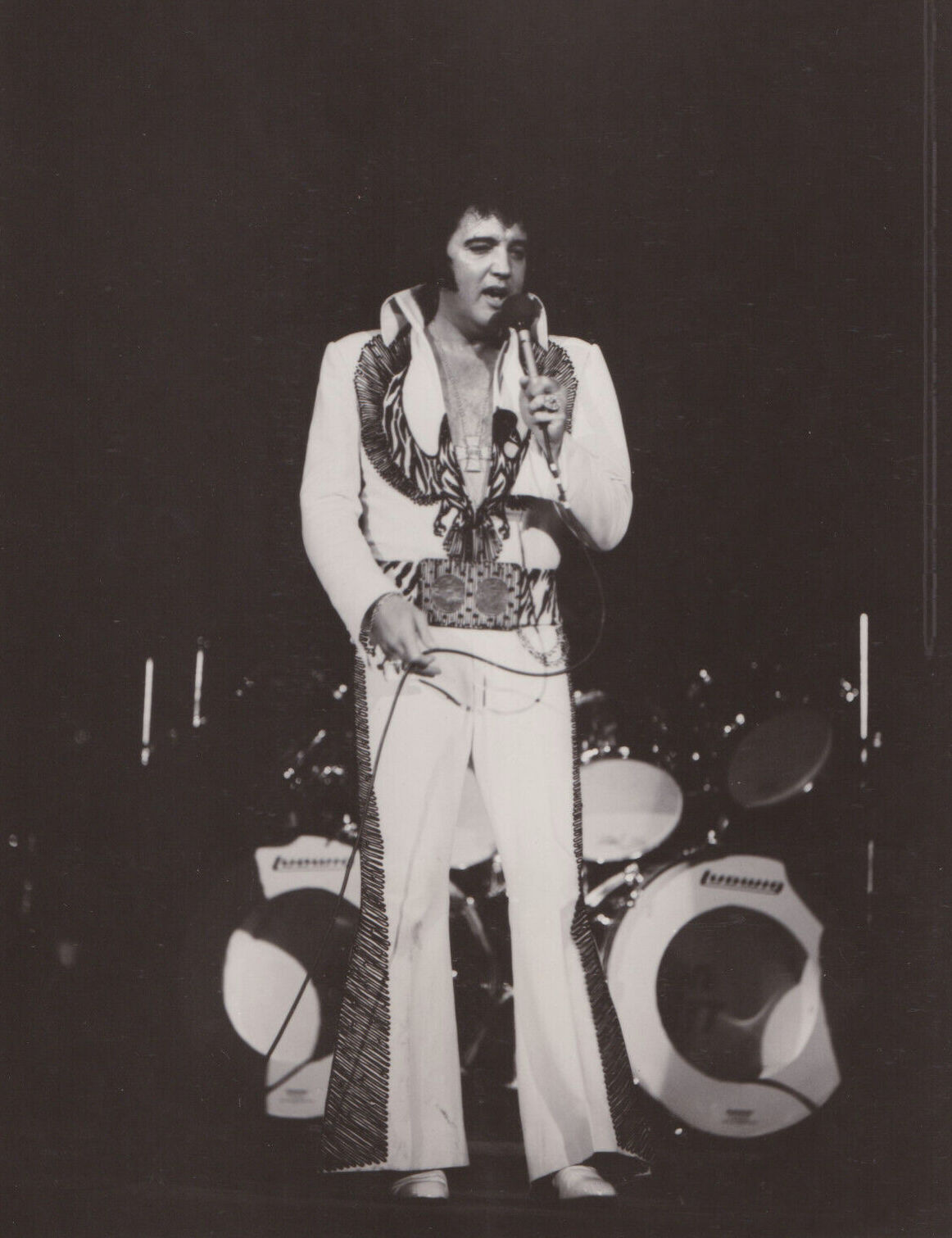
In 1974, Elvis was 39 years old and far from a picture of health. It’s hard to get an accurate picture of his lifestyle and underlying conditions, but it’s generally accepted that in this era Elvis was known to have problems with hypertension, high cholesterol, bowel issues, poor sleep, and persistent pain, all of which contributed to him using a variety of drugs to get through performances and life.
What’s important to know is that these drugs were legally prescribed and supplied. Like many other famous people of the time (and today?) there were (are?) plenty of ‘Dr Feelgood’s’ to prescribe, supply, and administer substances with questionable therapeutic benefit to people willing to pay.6
In August 1977 at the age of 42 years old, Elvis was found dead on the bathroom floor in his home of Graceland as a result of heart disease.7 Now, I don’t want to fall into the trap of armchair analysis here - there’s plenty of rumour and conspiracy theories already - but I do think it provides a useful illustration of the cumulative risks associated with using multiple medicines that’s important to acknowledge.
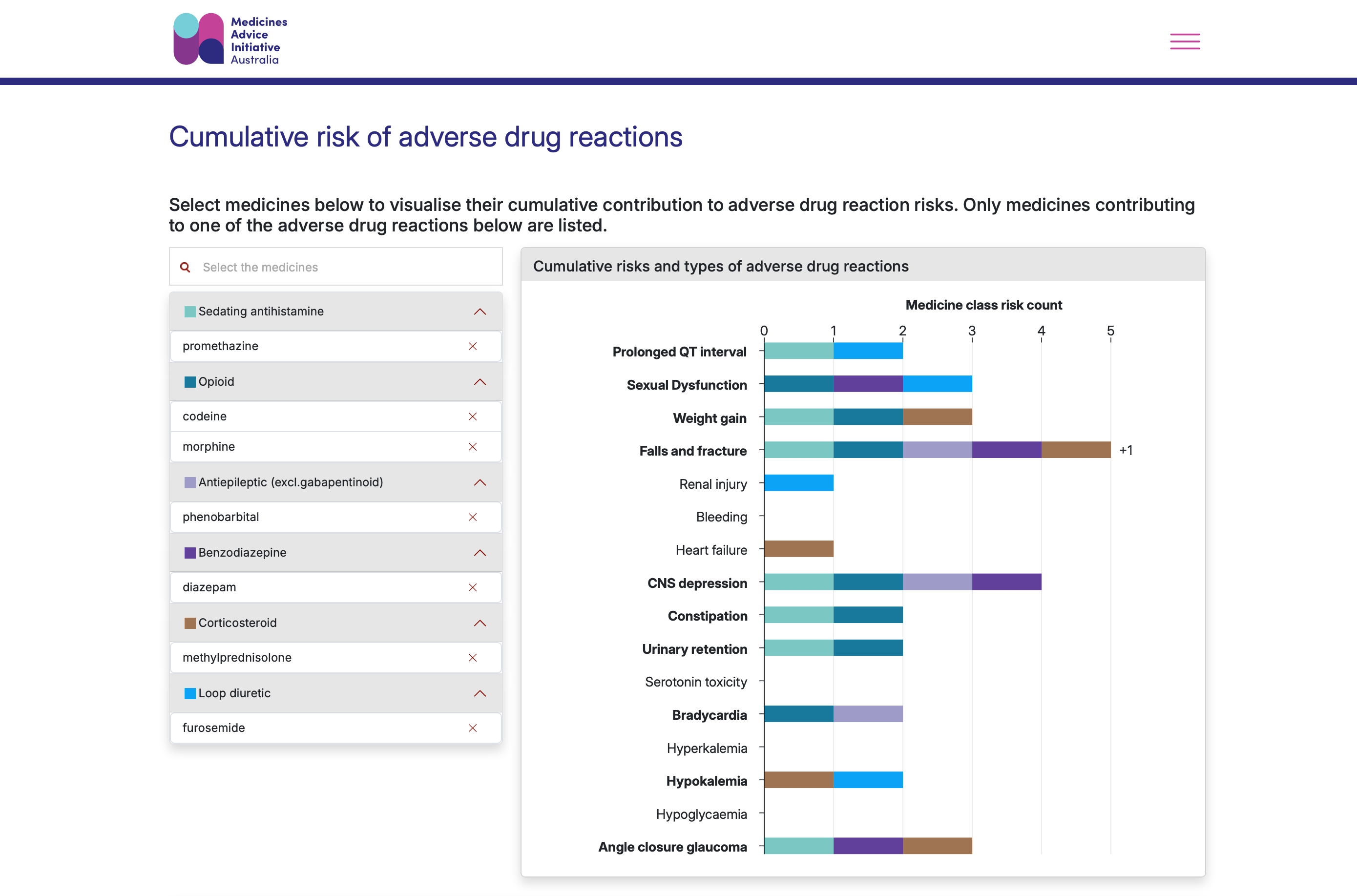
News reports from 1977 stated that Elvis had around ten different prescription medicines in his blood at the time of his death, including high (but not toxic) amounts of codeine, opioids, and sedatives. Whether they killed him or not, a combination of substances like this would most certainly have contributed to harms. I’ve illustrated in the figure below, using a tool that visualises cumulative risk of adverse drug reactions from prescribed medicines.
Let’s bring this performance to a close by returning to our Elvis impersonation metaphor. Yes, medicines can play an important supporting role, but there’s a lot more to the performance. Small improvements in the fundamentals - nutrition, movement, stress, sleep - can result in big gains. Don’t underestimate how much they can add to your star quality.
Medicines can support your performance - but they won’t get you to Graceland.
Thanks for reading Lessons on Drugs, I hope you found something of value here - if you did, please click on that heart, share, comment, it’s all encouragement that’s very gratefully received. If you’d like to check out other posts - you can find them all here:

While I don’t have a sparkly bomber jacket (yet?), I did ensure we went to Graceland while in Memphis. No regrets, and plenty of tacky souvenirs to show for it.


I wrote this off the cuff, but then I did my due diligence and found that there is, of course, an official scoring system. Vocals counts for 40%, with style, stage presence, and overall performance each count for 20%.
Not one of the official rules.
I could go on about the world’s obsession with ‘optimising’ all day. ‘Optimise’ has become a trigger word for me. Because, which metric are you actually optimising for? The thing about complex systems is that they often behave counter intuitively - ‘optimising’ one function often results in a reduction in performance overall. I’m stopping now before I go full rant mode.
For example, standard recommendation for heart failure management is quadruple therapy with a cardioselective beta blocker, renin-angiotensin system inhibitor, mineralocorticoid receptor agonist, and SGLT2-inhibitor.
Dr George Nichopoulos, or ‘Dr Nick’ (not the one from The Simpsons, but maybe the inspiration for?) was known to be Elvis’ primary medical practitioner. He was prosecuted for overprescribing medicines to Elvis and others, and while he was acquitted of charges, he was later reprimanded by the Tennessee medical board who suspended his license. I did find this interview, where he talks about Elvis’ medical problems and drug use (including Dr Nick’s attempt to use placebos to reduce substance use), but I’m not sure how much trust you can put into the testimony of someone who wilfully prescribed copious amounts of medicines within this type of context. Even prescribing codeine in someone who is already dealing with constipation is questionable as far as I’m concerned.
There are multiple rumours and interrelated conspiracy theories surrounding his death - that he isn’t dead at all (there was a whole thing about body snatching), that he had a heart attack due to straining too much on the toilet and died with four months of stool stuck in his bowels, that he had a drug overdose but it was covered up because there was a whole weird thing with Elvis meeting Nixon and asking to be a Federal Agent at Large, that he had some sort of autoimmune disorder brought on by head injuries …as entertaining and curiosity-inducing as they are, I am not confident the sources are all that reliable. It’s really hard to determine what’s real information and what is dodgy health practitioners looking to profiteer or weave a narrative that ensures they’re able to keep their career. Until the complete autopsy findings are released on the 50th anniversary of his death, I think the most reasonable thing to do is to go by the available autopsy report and official statements at the time. We don’t have long to wait though - next year marks the 50th anniversary of his death.
Just a magical trip! Lovely wee baby! We’re now x3 grandparents and I do hope you’re getting some sleep! All the best, John.
I got Elvis Forty Greatest for Christmas when I was six and I was his biggest fan. I was devastated when he died. It’s such a shame that most people only know him as the fat drug addict who ate peanut butter and banana sandwiches. He was young and handsome with great moves once.
No drugs for me thank you!